Showing posts with label Books. Show all posts

Sunday, January 29, 2023

Just a little perspective

Two quick pictures.

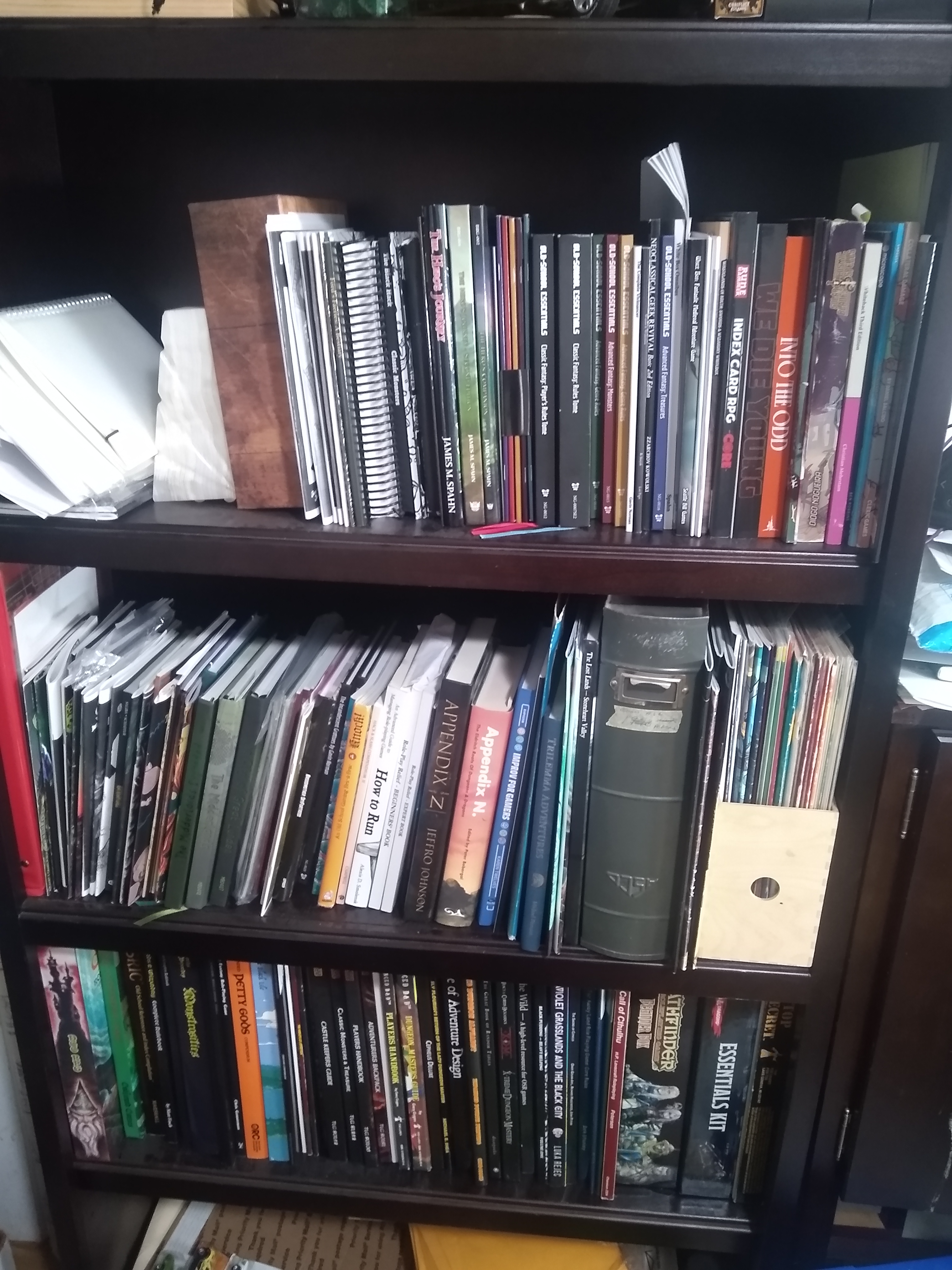
Shelfie with most of my game and game-adjacent books:


And the proportion of those that were published under the OGL:

Just in case anyone is curious about the impact of those three little letters.


Wednesday, June 22, 2022

Dune, June '22 read-through thoughts


I first read Dune the summer of 7th grade, I believe. Checked out the big 1st edition hardback from the library. I'm certain that part of the read was in the wheat truck, waiting to unload the combine harvester. (I'm sure that my treatment of said book was detrimental to its collector's value. But if anyone out there has a used library copy with a bit of wheat chaff in the pages, you know where it's from...)

Since then, I've re-read the book a good handful of times, every few years or so. Because of the multiple themes lined out in the book, I tend to pick up something new each time, or at least read with a different emphasis or context.

I've also read into the series, but it took me multiple tries to surmount “God Emperor.” I finally pushed through the entire series in the late autumn of 2001 while on a road trip.

Talk about context.

Anyway... It's been a number of years since I've creased the cover, and I had a week away from home out visiting family on the Plains (site of the first read), and I decided to bring along a few books that were due for a re-read, Dune among them.

Although I haven't seen the current film iteration, I'm sure that my reading was colored by discussions of the film, as well as some recent commentaries on the book (esp. Matt Colville).

What did I pick up this time?

Well, it's a fast read for me. Partly due to familiarity, partly Herbert's writing style. The chapter length is good, and the flow of writing and plot tends to get me into that “one more chapter” mode, especially since I was reading this with the anticipation of particular upcoming plot moments.

I few other observations on this run-through...

Leto and his advisers are aware and angling to contact and enlist the Fremen almost immediately. They suspect the capabilities of the Fremen, especially with respect to their potential martial prowess. And although the team makes good in-roads, both Leto, and separately Jessica via manipulation of the Missionaria Protectiva framework planted within the religious consciousness of the people, they simply run out of time as the Emperor/Harkonnen collaboration intervenes.

A recollection of Paul's ongoing fears and resistance to becoming the Lisan Al-Gaib. He repeatedly uses the premonitions granted through his genetics and Spice addiction, seeing the majority of futures resulting in jihad, and fearing that – it seems he only attempts the Water of Life as an attempt to find a way to avoid this outcome. Either way, it seems that the prophecy is self-fulfilling, no matter Paul's machinations.

Paul's observation that Count Fenrig is one of the failed Kwisatz Haderach bred by the BG, and that Lady Fenrig intended to become impregnated by Feyd-Rautha as a fallback or means to salvage the breeding program interrupted by Jessica.

Speaking of Fenrig, I always recalled him speaking with a lot of Hmmms and Ahhhhs. But I noticed that Herbert wrote the interjections into many peoples' speech patterns as they hesitate or think before speaking. This probably stands out, also, due to my multiple reads of the “Doon” parody.

Leto's strength of leadership through empathy and personal connection. Late in the book, Gurney Halleck repeatedly points out to Paul that he has lost that empathy in comparison to his father, indicating the loss of humanity as Paul succumbs to the KH myth.

Seems like this whole messiah thing may not be all its cracked up to be. Perhaps time to revisit more of the series...

Wednesday, May 29, 2019

Mini-Review: The Year 1000

A couple months back, Colin Green mentioned picking up some new reading material of history for adding flavor and verisimilitude to one of his campaigns.

I recommended The Year 1000: What Life Was Like at the Turn of the First Millennium, An Englishman's World.

It had been several years since I read the book, so I took a quick burn through to remember its high points.

So here we go ...

As I've groused about before - history is taught poorly, so finding a well-written, entertaining history book is of value. The Year 1000 definitely meets this criteria.

Like many histories, the challenge of the time period is the general lack of surviving documents - either from lack of initial documentation, preservation, or destruction by later regimes.  As the book denotes, the surviving direct documentation for the time period in England may fill a bankers' box.

The book itself is themed around the Julius Works Calendar, one of the few surviving written works of that time period, and describes passage of a year at the approximate turn of the millennia, near the end of the period of Anglo-Saxon rule in England.

Each chapter is inspired by the month's calendar page, and describes both common life and activities for the month, as well as a larger theme for overall English culture or leadership. And, as the book looks at the turn of the millennium, it also uses the calendar as a tool to illustrate the transitions that England underwent during that era, such as unifying from four kingdoms into one under a centralized monarchy, progressions of strong and weak leadership (Alfred the Great vs Aethelred the Unready), the conflict and partial rule by the Danes, and the impending succession conflict between Harold Godwinson, Harald Hardrada, and William of Normandy...

For instance, the July chapter begins with a description of the 'hungry gap,' the annual period between spring and the harvest of the first crops where food stores were exceedingly low, before segueing into a discussion of the evolution and spread of monastic worship and life in the latter part of the first millennia. The chapter then expands on the monarchy (under King Edgar) using the church to legitimize the rule, and the church's role as a repository and distributor of the written word.

Overall, the format make for a fun, easy read, with informative chapters that don't drag.  By combining common life and greater culture, the book builds a whole world, not simply a collection of dates and events.

And for the aforementioned gaming verisimilitude, the book provides much color for background as the players encounter or interact with both commoners and notables in their travels. The monthly format can provide fun "what's going on in the background" descriptions depending on local seasons and activities.  And, of course, the "real history" of invasions, bickering fiefdoms, successions, and growing and waning cultural influences may provide much grist for adventue or campaign seeds. 

Enjoy!


(I discovered thru Anchor/MeWe that at least three other people also bought or were considering the book, so I hope that they are enjoying it as well...)

Thursday, March 28, 2019

Mini-Review: The Little Ice Age

I've often groused about how history seems to be taught so poorly - at least my exposure to it in middle and high school. I didn't have a well-taught history class until college - where I was actually taught by a history prof (Hist 103: "Nomads of Inner Asia") - rather than a coach who needed class assignments.

I learned history on family vacations - where we stopped at every historical marker and plenty of museums, other travel opportunities, and picking and choosing books that piqued my interest at a given time... The single biggest flaw/challenge with teaching history is putting it in context - the 'why' of history, i suppose.  I'ts easier to place context when you are standing on the roadside, reading a historical marker overlooking a valley tracked by immigrant trails of the US Western Expansion, or perhaps trying to understand the setting of a semi-historical movie, or attempting to better understand the relationships between cultures and religions that extend into modern times....

Enough bitching...

Onto context - here we are gaming on our typically faux-medieval milleu.  Not having been in an ongoing campaign - how much does weather and climate really enter into most games?  There are certainly plenty of tables for randomizing weather, but how often do DM's crack them, and the associated benefits and challenges of travel and adventure during different seasons?

Enter The Little Ice Age: How Climate Made History 1300-1850 purchased used at the local Goodwill for the princely sum of $2.99. 

Briefly, the book outlines and discusses the period of climatic variation/instability between the earlier Medieval Warm Period and the beginning of the Industrial Age. A number of factors lead to generally colder and wetter conditions in the Atlantic Ocean and Europe, with associated stress on culture and populations (there is limited information from other portions of the world, so the book focuses on Europe) . 

Different regions and leaderships took differing strategies (if at all) in the face of the unknown -

The English and Dutch became more flexible and innovative in their land use and food production, while the French maintained more traditional feudal-era practices and management. This led to certain resiliency on the formers' part (although not completely effective) and contributed to increased famine and the eventual French Revolution for the latter. 

The economically and nutritionally important cod fisheries of the North Sea collapsed due to decreasing sea temperatures and pack ice - the fishermen followed the cod east, into more distant and dangerous fisheries (there is somewhat credible evidence that Breton and Irish fishermen fished cod off the North American coasts in the 1400's and were perfectly aware of a continent there, but like any good fishermen, were bane to give up the location of a good fishing hole....)

Glaciers advanced from the Alps, blocking passes and destroying or putting towns at risk.

Landholders experimented with new crop rotation and breed adaptation. New crops were adopted, including the potato from the New World.  Followed by the risks of monocropping in the case of Ireland...

Of course, during this time, Europe also began its surge of exploration and colonization, the Renaissance and Enlightenment took place, and Continent-wide political upheavals and wars mapped out modern political boundaries. So there's that....  Instability can breed innovation and action...

Gaming content and context:
As discussed above, the weather and longer term climate is a local/regional stress-driver.  Do the characters experience restricted travel and movement, or effects on their health?
Can a bad winter (or series of bad seasons) spur an invasion or conquest for resources - land, food, etc. Or perhaps take advantage of a weakened populace and military? 
Are the characters moving among other displaced populations,  and becoming caught up in political instability or intrigue?
What about prices and availability of food, other consumables, and equipment.  Does a small, impoverished are even want a few extra mouths wandering through, or are they firmly asked to keep moving? 

Just some thoughts...  You'll come up with more creative and appropriate elements to your world than I can.

Sunday, January 27, 2019

Book Review: Noblesse Oblige


I originally found Uri Kurlianchik through his DND Kids blog, where I enjoyed his observations and tales of running games/herding adolescents.  So when his announcement of a new book came across my MeWe feed, I couldn't pass it up.  Besides, I had a long plane ride coming up, and paper-based reading fare is my favored travel entertainment.

So here's a synopsis and review:


There's no one to rescue the Princess.

Our adventure takes place in a decadent outpost at the edge of the solar system near the border with the insanity-laced Oort cloud and its threatening, alien occupants (the appropriately-termed horror vacui). The unnamed Princess arrives at the asteroid outpost-mansion of an eccentric outlaw and immediately finds herself to be the center of attention, but not in a way that she is used to, or even remotely comfortable with.... For she is to be auctioned off to the highest bidder among a group of equally eccentric and murderous characters.

So marooned with this rogues gallery, with only a ferret (that turns out to be much more than an emotional support animal) and a rapidly-depleting personal micro-armory, she seeks resources and unreliable allies in her attempts to equal the manipulations and machinations of her 'suitors.'

As her 'suitors' get eliminated, leaving increasingly dangerous and deceitful foes, our Princess resorts to greater subterfuge and methodologies as the stakes rise. Will she triumph?
The book is a fun romp in a dystopian future ruled by capitalist-monarchies. Each chapter is headed by an appropriate Dune-like quote with responses/commentary by the characters. Interspersed flashback chapters have vignettes of the various protagonists, linking them, and creating backstory. The Princess is no Mary Sue, the situation remains tenuous throughout.  But she rises to the occasion from a sheltered young woman to a formidable opponent through her own keen observations, recollections of near-forgotten lessons from family and advisors, and resourcefulness. For those of us who enjoy our futures slightly dark and cynical, with a haughty heroine who can't even believe that she's having to put up with these indignities, grab a copy.


Friday, April 13, 2018

Lost Tomes 6

Hi +j garrison! Thank you for hosting this month's RPG Blog Carnival, "Journals, Grimoires and Spell-Books."


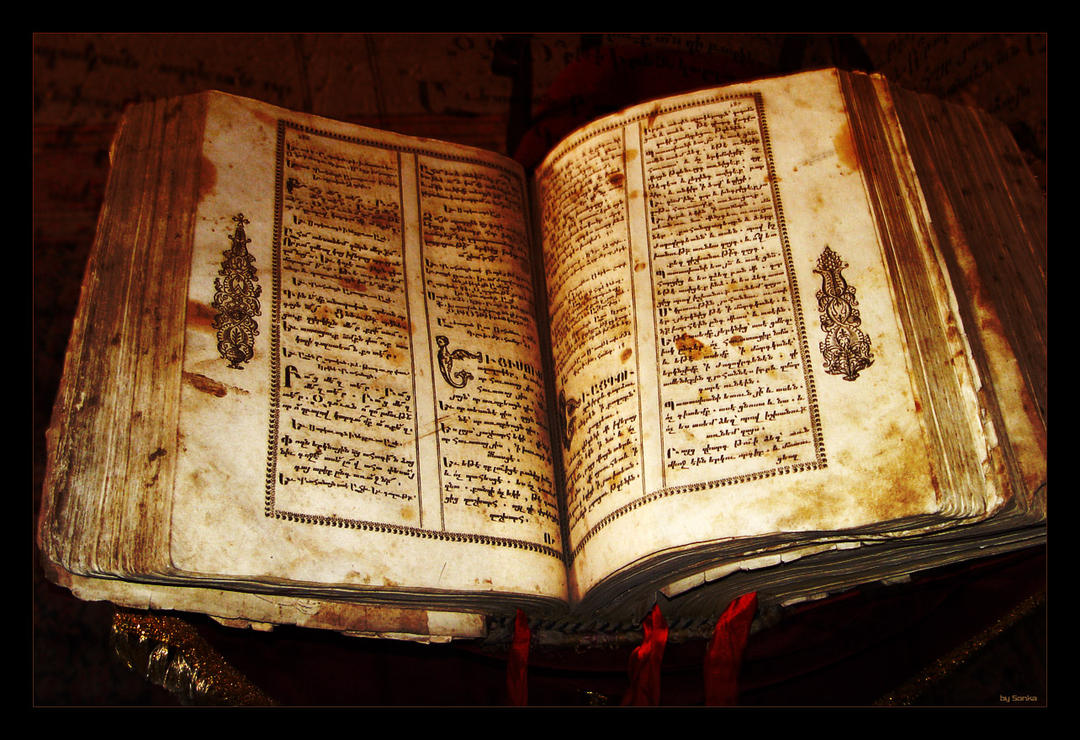
It's been a while (just over a year, sheesh!) since I last did a list of 'Lost Tomes,' so this was a fine inspiration to dig in my notes and gin up a few bits of the written word for your adventurers to find or seek.  So here's seven more for the library:

Source
1. The Caldrie Registry: An old wedding contract blessed by priests of the Wooded Lands, the scroll records the marriage of the last of the First Rangers, Veeder Caldrie and her husband, Elburg Caldrie. As was the tradition in those days, he took her name, thus extending the matriarchal line, and reinforcing his place as an outsider in the Woods. Though the courtship and wedding was established in love, it soon soured, as Elburg chafed at his place as a second-class citizen within the Lands. The Conflagration of 1088 and the subsequent invasion of the eastern Wooded Lands by chaos forces was blamed on Elburg's jealousies, and he was scapegoated, driven from the lands and his family...

Source
2. The Agekel-sam:  Found within an abandoned elfin redoubt deep within the Seral Forest, the book is filled with an elaborate, curving script that shimmers and causes the reader to go dizzy. Non-fey readers must save or; 1) go mad; 2) go blind; 3) stare into the book, eschewing sleep or sustenance until dead; or 4) become possessed by the soul of a deceased elf. The script is not written on the page, but is "projected" onto it from the fey dimensions, a message from elfin lords that have passed on to the Rimlands. The script morphs and changes over time, reflecting the mercurial messaging and philosophies of the Rimland elves...

Source
3. Jared's Open Book: An indecipherable journal, found within the ruins of a itinerant alchemist-wizard's lab. The pages are stained, corroded and singed, outcomes of being too close to experiments both successful and failed. While several sages have attempted to unravel the script, it is not clear if the odd characters are an invented alphabet, or some foreign, alien language. The letters do not appear related to any known alphabet, leading some scholars to believe the script to be the fabrication of a madman. Others see too many connections and patterns, and believe the author to have been an individual displaced from location and perhaps even time. Artifacts and fragments of equipment found within the blasted rubble of the land suggest the latter. Early witnesses on site after the blast noted that the building had imploded, rather than exploded, as would be expected from the typical alchemist's failed experiment...

Source

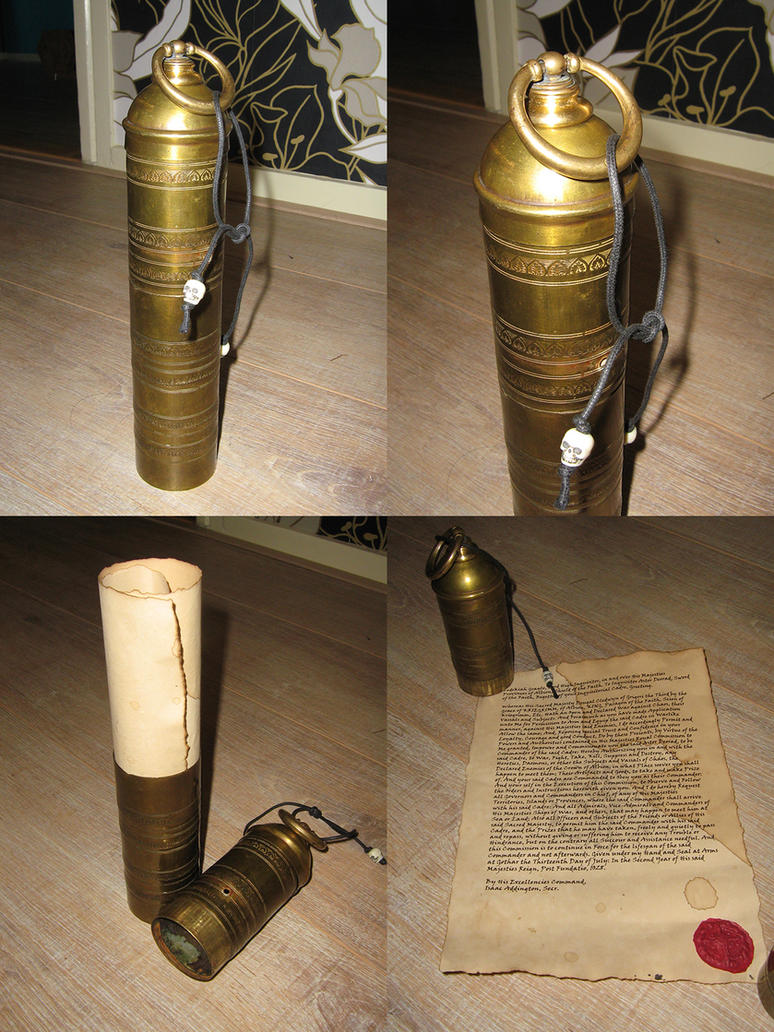
4. Druidic spell-tube: "Careful, Sermos.  That there scroll tube was crafted up by the Druids, for holding their esoteric spells on what odd leaves, carved sticks, or rune-scribed bones that one of those 'nature-boys' calls a scroll...  Now don't be puttin' your fancy arcanist scrolls in there.  I hear tell it will eat the spell clean off them. Or spit them out as frogs. At least that what my auntie told me..." The scroll tube, fabricated from a combination of tree cambium and vines, and kept alive through druidic preservation magic, fortifies the magic held within a druid-crafted scroll (a great rarity). Due to its animist energies, the scroll tube is hostile to any arcane scrolls placed within, ripping the spell from the parchment within 1d4 hours.


Source
5. Molphilius' Soul Book: At the moment of death, the soul and personality of the lost mage was transferred to his old spellbook, where he still resides.  The book will be found in some forgotten, dusty corner, or among a boss-monster's treasures. If found/rescued, he will initially be grateful and gregarious, eager for word of the outside world. This mood will fade quickly, and he will soon chafe at his situation. While he may incant any of his known spells (random as per 7th Level MU), he is, as would be expected, a cranky old bugger, and may only acquiesce to assisting his 'bearer' under duress. At the first opportunity, he will attempt to charm his bearer into assisting him in his quest to locate a vivimancer of sufficient power and knowledge to reinstall him into a living body.


Source
6. The Pelagic Psalter: Contained within the salt-and-iodine reeking pages are a lyrical history of antediluvian times. The book contains the languages of ancient sea-going creatures that troll the abyss, only arising once a century to feed at the surface before descending back to the lightless depths. If one is fortunate enough to encounter one of these massive, languid creatures, the reader may hope to use the book to exchange a few pleasantries or gather a tidbit of wisdom from before the time that feet trod the land.

source

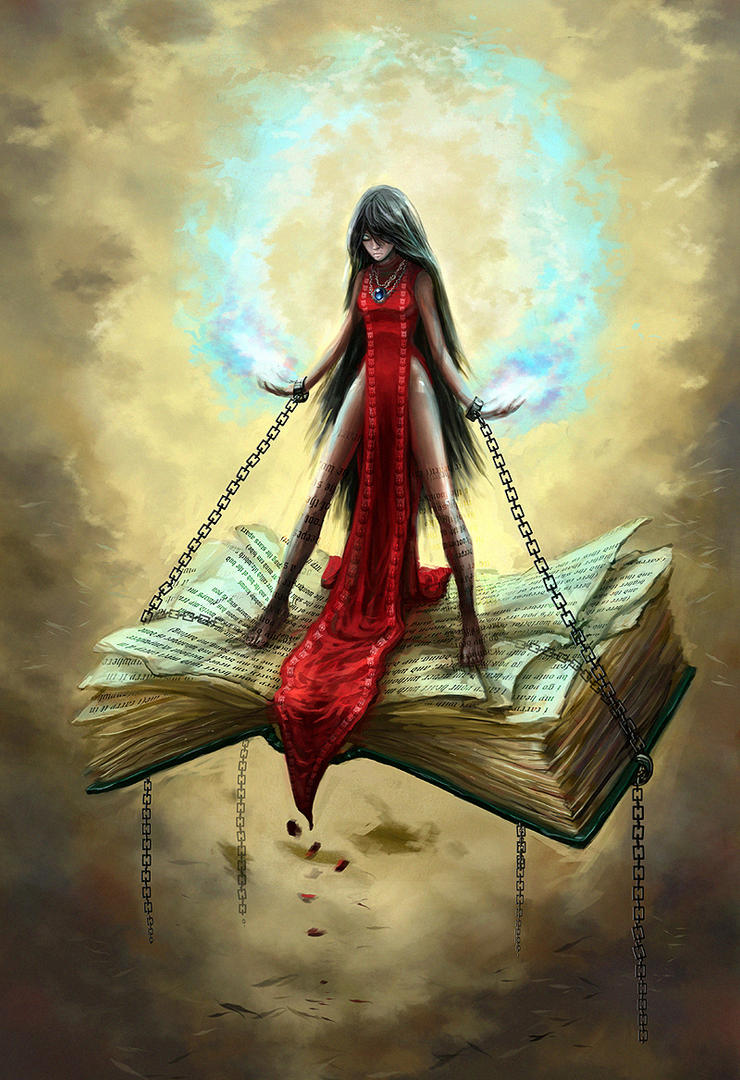
7. Danroth's Album: A spellbook for conjuring the Paper Dragon (HD 2; AC 5 [14]; Atk: breath as 'shard's of paper causing minor cuts (1d3), save or blinded for 1d2 rounds; Move 12 (fly); Special: golem resistances, double damage from magical fire.) Each book will contain pages sufficient to create 1d4 dragons. As a golem, the 'dragon' will follow simple commands, including acting as a guard, retrieving small items (up to one pound), and performing minor scouting. An individual dragon is not durable, and will degrade within two weeks if not damaged otherwise.
Sunday, March 5, 2017

Lost Tomes 5

....wherein we find more books to seek, stumble upon, or suppress....

Source

Funerary of Ildar:  A hide-bound book of resurrection of the dead.  The book contains powerful texts for the retrieval of the soul from beyond, and re-securing it to the mortal body.  However, the subject of the resurrection must now permanently keep the book in their possession to maintain their revivified status.  Physical separation from the book will sever the person's hold on life, rendering them permanently dead.  The book will be found with a decayed corpse a few feet away, in the attitude of crawling toward the volume.

The Mortuaria of Radow: A clandestine directory of maps to a dynasty's King-barrows.  It was compiled by generations of tomb-builders (and grave-robbers) in deepest secrecy.  If the map-book's unique cipher can be broken, the directory shows the locations, contents, and hazards of dozens of tombs.  Map fragments secreted in the book's cover consist of partial information, requiring a complicated sequence of overlays and foldings to depict the barrow locations. There is a likelihood that a number of these tombs may remain undefiled. If found on a person by the Dynasty's forces, the copy will be immediately destroyed, and the person and their companions buried alive in punishment.  Two copies are rumored to exist.

Worm-caller's Scrolls:  Stinking, fetid skins wrap parchment written in the runes of a mysterious subterranean cult.  The cult claims to speak the languages of and communes with various monstrous burrowing annelids.  The bearers of the scrolls may pass through giant worm-burrows without harm.  The odor of the scrolls identifies the bearers as 'worm-talkers,' causing generally negative reactions from other subterranean dwellers.  Mastering any of the associated worm-cants will allow communication with a number of species of giant hell-worms known or rumored in the land.

Source

Onieromancers' Somnambularium: A spellbook of an Onieromancer - an arcane practitioner and manipulator of sleep and the night.  The book contains numerous spells associated with the discipline,  including various 'dreamwalking' spells for the viewing and manipulation of dreams (and dreamers...).  The book's deep black cover imitates a moonless night sky. Any non-onieromancer handling the book must save vs spells or fall into a deep trance, simply staring at the book's cover until the book is removed or covered.

Gnoll-codex:  A discredited sage's study of the matrilineal lines and mating habits of the gnoll clans of the Outer Plains.  The illustrations are exceptionally detailed and hint at quite personalized research in the matter.

source
The Cog-Rhack: Developed by secret castes of dwarven majicker-smiths, this iron-bound manual secured with complicated clockwork specifies the creation and operation of mobile automatons for the transport of ore and other heavy hauling.

Songbooks of Ghamoskel: A collection of chants and psalters of marginalized non-human gods.  The texts include:

  1. Fungus Lord Hymnal  - Songs of hallucination and decay in dedication to the spore-gods. 
  2. Insect Anthiem - Trilling songs of the hive and communal goals.  Certain phrases within the verses allow a disorienting gateway to the compound visions of the hive minds.
  3. Labyrinthinos - Paeans to the minotaur-gods of the mazes and lost twisted places. The supplicant, while keeping up the songs, will not be misdirected in a maze.
  4. The Yiap - Calls to an alien, one-legged saltating god of the plains.  With great leaping bounds it attempts to stomp out the unworthy...
  5. Oestern Ent-songs - Sonorous, ponderous chants of the tree folk - takes days to complete a single verse.  Full choral symphonies in the language can outlast a human lifetime.
  6. The Torhoninahin -  Subsonic moans and meditations of the near-immortal god-mammoth that tracks among the frozen northern wastes and is worshiped by the Hatgarrak Wanderers as the Tundra-lord.


Source

Thursday, September 24, 2015

Study report - RPG books available in libraries

A recent study by a professor at Ithaca College found that very few libraries include RPG books and resources with in their collections.

Based on review of the Online Computer Library Center, a database of 72,000 libraries, very few libraries have even a single copy of an RPG book in circulation, in spite of the genre's 40+ year run.

Interestingly, there may be some data gaps, as the search was by ISBN numbers, which weren't assigned to early additions of TSR manuals, or their contemporary Runequest books.

The authors posit that inclusion of the manuals in the reference stacks have value for library -sponsored community gaming events (40% of liraries reportedly host gmae events of some type), as references for academic or similar study, such as their influence on the video gaming industry and game theory.

Anyway, an interesting read.

Link to download report

Friday, August 28, 2015

Lost Tomes 4 - Five colorful books

The Orange - Greatly feared and suppressed, huge bounties for its recovery (and preferably, destruction) have been posted by kings and conquerors. It contains spells for the hegemonic connection of great forces, such as controlling an army, and causing it to move and act as a single mind. Current rumor implies that the death cult of Burver the Ever-bleeding intends to find it, and put it to use, plotting to cause the population of the city-state of Kinitan to march into the sea to its death.

The Red - Chants from the book are said to protect plane-walkers and other inter-dimensional travelers from the incorporeal guardians and watchdogs who seek to rend the sanity and souls of those with the temerity to intrude into planes or realities where they do not belong. Later chapters describe hopeful methods of regaining souls lost to inter-planer predators and demons.

source

The Green - Anyone reading this book will have to fight a distracting buzzing of the teeth or lose concentration while trying to decipher its runes.  However, researchers overcoming such distractions will gain knowledge of sundry obscure acids, and insight into the creation of a Universal Solvent.
source

The Blue - Lost in a deep well and guarded by a mostly-invisible cat - only its ears and massive clawed paws are visible. The guardian feline may only be driven off only with weapons of legendary quality. Crackling with energy, a reader's hair will stand on end. While the book is open and being read aloud, the user is immune to electrical attack. Held within the pages of the book is the spirit of an ancient blue dragon, Craeworeuth, trapped by a sorcerer who manipulated the dragon's hubris. The spirit, once freed, will act as a guide through the great Eastern Desert, its old territory, which no man has crossed.With enough cajoling and flattery, the spirit may tell great stories of its consort with the thunder gods.
source

The Black - Compiled by the Alchemist/Magister Deloc the Fourth, wrapped in an iron cover, smelling slightly of sulfur and cardamom.  Research of the texts allows users to access methodologies to create golems, particularly earth and metal-based, for one-half of the exotic materials cost.

The White - Wrapped in superficial sheepskin, the pages appear blank, other than a few faint water-stains.  The text appear only once every few years under certain alignments of stars and planets, revealing prayers and rituals to speak to angels. Angels are happy to converse, as the afterlife is dull and flat. However, this boredom does lead to some mischievousness, and any individual making contact with an angel will likely find themselves under a geas to pursue some absurd quest or acquisition.


source

Monday, April 13, 2015

The Maxx

'Twas my birthday last week.

Came home to a few Amazon boxes from the wife.  Seems that she wandered back into the dark recesses of my wish list and found some 90's goodness in the form of Sam Kieth's The Maxx - a lovely trip through a surreal melding of reality and subconscious (with a healthy helping of suppressed traumas...).


I'll re-read the books and re-watch the original MTV shorts and post up a review when I get back from vacation.

And she got me some art pens - I'm going to give  +Dyson Logos and +matt jackson a run for their mapping money...

Ok, maybe not.  But scribbling will occur...

Off to the desert for a week. To my two readers and all the Russian spam sites, see you when I get back.

Thursday, March 26, 2015

Thanks Bill!

Purchased the S&W Complete Rulebook during Frog God's recent one-day sale.

In addition to being a most excellent rules-set, it also makes a very serviceable beer coaster...

(Sorry, Erol)

Thursday, February 26, 2015

Lost Tomes 3

L is for Lost Tomes (previously here, and here)

5 more books quickly ginned up to keep the Alphabet Dungeon stocked:
source
Lebelia's Bestiary.
Written in High Elf, this book describe various small to medium monsters and animals, with intricately-drawn figures of the creatures in question. Most pages are missing, apparent torn free.
Each remaining page, if torn out, burned and spoken over with correct incanation, will release the depicted monster (or monsters) up to 3 HD as per summon monster, except the spell duration is twice as long.  There will be 2d10 pages remaining, with random creatures pictured.

source
Chionld's Codex of Rejuvenated Lands:
Crafted by a druid committed to rehabilitating dead lands, this book, bound in dark brown bark, smells of earth and cut grass.  The book contains powerful ritual magics for the restoration of blighted or cursed lands to fruitfulness. Only readable by high-level druids conversant in the Old Tongue.

source
Lotus-Warrior Scroll:
Written in a foreign calligraphy, the scroll depicts a running creature trailing leaf-like feathers.  The scroll is 'planted' in the ground, anointed with 4 hp of blood, and the chant written on the scroll is repeated three times.  The ritual will call a Lotus-warrior from its plane of training and contemplation. The plant-based humanoid resembles a weasel coated in a close 'fur' of leaves. This magical creature bounds and tumbles from its home plane, and joyously announces its intent to serve its summoner in the pursuit of good and beauty. When faced with an enemy, the Lotus-warrior gambols and tumbles, striking and tripping with its whip-like head-leaf and stabbing with its lance-like wooden sword.  At the end of a day, the warrior will take a deep bow, and disappear in a flash of green.  An art object or valuable gem in possession of the party will disappear with it.
Lotus-warrior - 3HD, AC 4/16 (dodging and tumbling), Atk: (2) 1d6 (Head-leaf ) and 1d8 (lance). Special: 15' reach with head-leaf, target makes DEX save on successful hit or tripped. Warrior may strike creatures immune to normal weapons. May cast Protection from Evil once per day.


The Summoner's Gag:
This scroll appears to contain one to three offensive or attack spells (e.g. magic missile, web, lightning, etc.) However, if the caster reads from it, hidden glyphs become visible, animating the scroll, and gagging and suffocating the user, rendering them helpless (typically at the worst possible moment in melee). The scroll will deal 1d4 points choking and pummeling damage per round for 1d4+1 rounds. During this time, the spellcaster will be unable to speak or defend themselves against attack. The scroll may be burned to free the caster, but they will take half damage from the fire.

source
The Inquisitor's Scrollcase:
This relic, created by the Grand Inquisitor Tamrad three generations ago, amplifies mental control spells on scrolls stored within (e.g. charm).  Saves against spells stored in the scroll case are made at -2.  Additionally, the scroll case, if touched to an 'interviewee' will compel them to answer three questions to the best of their ability.

Friday, February 6, 2015

Grimjack

When wandering through the local Half Price books a few months back (ostensibly to just buy Divergent for the daughter), I stumbled on compilation copies of a part of the Grimjack comic series (Legend of Grimjack, Volumes 1-3). I'd first read the series in the late 80's when sharing a house with a comic-hound (I was also exposed to Moore and Miller, Chadwick's Concrete, early Grendel, X-Men, etc. during that time). The series was written by John Ostrander and inked by Tim Truman, and was one of the original series produced by the now-defunct First Comics. Grimjack started out as a backup feature in First's 'Starslayer' comic, but rapidly gained traction and was granted his own standalone series. The series ran for 81 issues between 1984 and 1991.

Grimjack, in his usual cover pose - cigarette, cutlass, and poor trigger discipline.
The series opened up my mind for its setting - the pan-dimensional city of Cynosure, where realities met, popped in and out of existence, and generally mucked things up. Humans rubbed elbows with fantastic creatures, aliens and gods. Magic worked in one block, technology the next. A wise brawler carries a blade and a gun, in case one or the other failed in some pocket universe hidden in a alleyway. The next closest setting to this that I had read were the Terri Windling 'Borderlands' books, but Grimjack took the setting to 11. The comic storylines are a mix of pulp noir, detective, sci-fi, fantasy, and general gonzo.

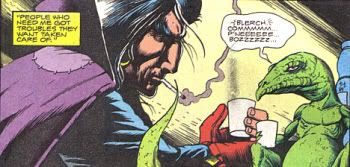
Grimjack (née John Gaunt) is a sword-for-hire within the City. He's a weathered and scarred veteran of the city's gladiatorial pits, police department, and secret police. When we meet him, he is typically at his table at the back of Munden's Bar, nursing a glass of whiskey, accompanied by Bob the Watchlizard.


And as any good noir lead, he has a passion for 'his' city, a certain sense of honor, and the ability to unleash violence in defense of either.

The writing, of course, has a certain cheesy pulp air to it:

Friday, January 23, 2015

Lost Tomes 2

More Lost and Found Books

previously

Twelve more (hopefully) interesting documents to find in a library or trove....

1. Urnell's Screaming Spellbook
Urnell Oughaughen was a right bastard of a wizard, and highly protective of his spellbook from the prying eyes of his ne'er do-well acolytes. Not satisfied with a mere Wizard Lock, he enchanted his spellbook to be noisome and insulting to anyone attempting to use it besides the rightful owner.

A face appears on any opened page, eyes and mouth formed as hole in the page. Text flows around the face as it wanders about the page, shouting and insulting the user.  The yelling and movement has the following possible affects:

1) Negates surprise or attempts at silence if opened.
2) The face is immune to magic, esp. charm, silence, sleep, etc.
3) Movement and disturbance of text increases chance of spell failure, particularly catastrophic failure.
4) Increases save potential of a target, where applicable.
5) If a new spell is recorded in the book, there is a 1d6 chance per day that the face will 'eat' the new spell.
6)  Unnerves any familiar, and the magic user will not be able to benefit from any familiar abilities while in possession of the book.

(May be used as a 4th-level magic user spell. Requires Remove Curse to negate.)

The book will contain 1d6 random spells each of 1d4+2 levels.

Source

Friday, January 2, 2015

"The Apartment Dweller's Bestiary"

My friend Kij is a Real Writer (vs. me, who is a geologist who leaves his keyboard unaccompanied in a roomful of macaques).

So reposting her most recent short piece, published in Clarkesworld Magazine. It's one story, or perhaps seventeen...

But it may be of assistance in identifying that ball of fur, perhaps with horns, that you catch out of the corner of your eye in that new apartment...

Enjoy!

Tuesday, December 30, 2014

Appendix N fail - Thomas Covenant.

I recently found the Thomas Covenant trilogy at Goodwill, and since I had never read the books, picked them up.

The trilogy is regarded as influential in the fantasy genre, particularly for its archetypal anti-hero, or unlikable, unwilling hero in the form of Thomas Covenant. He is a depressive, divorced author suffering from leprosy, who is periodically torn from the modern world and tossed into the fantasy world of "The Land." Disoriented, full of doubt, and self-loathing (hence his nickname, 'The Unbeliever'), he is mistaken as a reincarnated hero from a past conflict.

And I can't get through these books.

Slogged through Lord Foul's Bane, and am currently about halfway through The Illearth War. Hile Troy and his small force are approaching Doom's Retreat for what is, at best, a delaying action. And Covenant is tagging after High Lord Elena in search of the Seventh Ward, a power that the Lords are not prepared to wield.

Gawd, these books are interminable reads.

I understand that Covenant is meant to be an unlikable character, and was prepared for that (I've read/enjoyed plenty of other anti-hero centered novels). But I find the writing turgid and melodramatic, and none of the 'good guys' to be engaging or sympathetic. I suspect that I need more context on Donaldson's influence or subtext, but so far this experience has moved far into the territory of books I "should" read, rather than I "want" to read.

Apropos, io9 just posted this article on the Rule of 50 for when to abandon a read.

So I'm setting Tom aside for a more attractive and relevant read. Perhaps I'll return to the trilogy, to skim through the rest of Illearth, and take on The Power That Preserves another time.

(Similarly, I've often joked that Harvard Lampoon's 'Bored of the Rings,' which pares down the LOTR trilogy into a single volume, while somehow not apparently losing any significant content, is the length that the original trilogy 'should' have been.)

Any similar observations, experiences or context?

Friday, October 24, 2014

The Joy of Used Books.

Ordered a used copy from Amazon, $4.50, shipped.


Opened it to see if it had any stories (besides those on the pages).


It's autographed.

RIP, Iain. Hope you're enjoying that perfect dram somewhere.

Sunday, August 24, 2014

Twelve Lost Tomes

...to be injected into a library, treasure, or quest.  These may be very valuable to someone - either to be shared... or suppressed.
Source

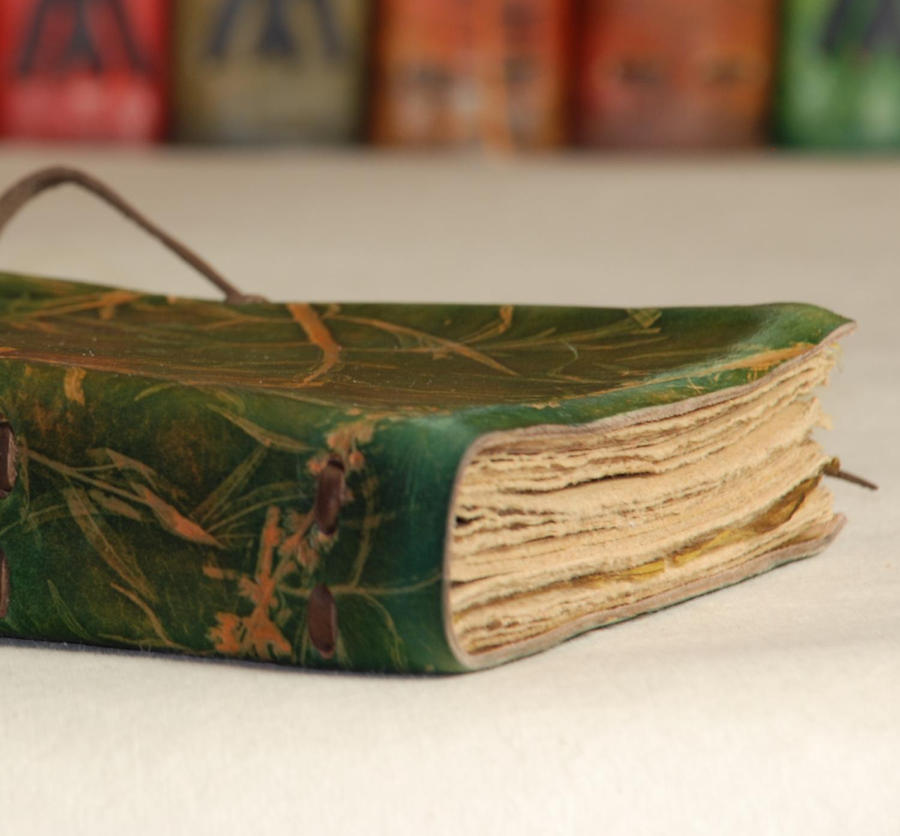
1.  Genealogy of Geramda Barthammer:  Parchment bound within intricate hammered-iron leaves. A history of the dwarves of Rodamine Peaks, whose holding have since usurped by another dwarven clan.  The genealogy traces the succession of leadership back 20 generations, and is necessary for a descendant of Barthammer to reclaim the stronghold and his inheritance.

2. The S'thter:  Pictographs and cuniform etched on wire-bound sheets of mica.  History of the lizardfolk's 'lost' city, allegedly located in the Desert of Glass. It documents the history and advances of the race prior to the coming of the humanoids and the race's subsequent downfall.  The book may include information on advanced 'magics' known to the ancestral lizardfolk.

3. The Inkarthel - Journal of a high-level necromancer, describes the creation of various 'skin-golems' and provides instructions for tattooed runes to imbue them with certain abilities and resistances.  Includes component lists for inks for the runic tattoos.  the runes are intended for use with golems and constructs only.  If these runes are tattooed into living flesh the recipient will perish unless a successful save vs death roll is made.  In which case, success will transfer the tattoo's ability to the living character.  There will likely be another cost associated with this tattooing, even if the transferal is successful

4. Tome of Curagol - An Ogre-mage's grimoire written on human skin (Shifting runes tattooed on the cover requires the bearer save vs. Spells or insanity).  Successful save will increase influence over non-human humanoids (+2 reaction rolls, doubles any charm effects/duration on non-human humanoids), gives power of augury once per day.
Source

5. Ganein Codex - Illuminated parchment scroll listing of 1001 names of God.  The names glow in a holy light, and fade from visibility once read.  Anyone reading all names aloud will receive one 'boon' (roll 1d10):
  1. Good Luck (+1 on all saving throws)
  2. Knowledge of an ancient secret or lost relic of great power
  3. Wisdom increased 1d4
  4. Insanity and incapacitated, left a drooling husk of former self
  5. Intelligence decreased 1d4
  6. PC donates all worldly goods and walks the earth as a prophet
  7. Chosen One of God, immediately attracts 3d4 fanatical followers
  8. Smiter of God (+1 vs all of opposite alignment (AC/to hit/Dam/saves))
  9. Struck mute
  10. Struck down as a blasphemer (lightning, meteor strike, pack of wolves...)
5. The Song of Samhans - An epic poem carved into a millstone, lost and half-buried in the ruins of an abandoned halfling burrow-hold.  It recounts a legendary halfling battle against an incursion of evil into their lands. Wihtin the text are mentions of an artifact-weapon - the Staff-Sling of Peplyn - wielded by a renowned halfling sheriff and folk-hero who led a successful counter-attack and repulsion of the dark troops. The hero, and his favored weapon, disappeared some time later while he was pursuing a band of lycanthropes near the borderlands with Saydraver.  Some say it is held as a trophy by a werewolf lord.
Source

6.  Leaves of Sil'las - Ancient elven script on pages of beaten mithril - An elven history documenting genealogies and  place-names of elven cities lost during the advance of the Neferu Desert and the desertification of the ancestral homeland.  This record is actively sought by the Anfauglir (Plains Elves) as a relic text and resource for locating several lost cities and revered sites.

7. The Ecath'schoth - A scroll of serpent-hide housed within a case of blackened ironwood.  This scroll of forbidden rites is suspected to have lead to the downfall of a past empire - Any bearer will be branded as a heretic by most churches.  Any lawful cleric who comes in possession of the scroll will either switch alignment and become a follower of one of the Dark Gods (1/3) or immediately fall out of favor with their deity and lose all cleric abilities (2/3).

Source

9. The Ineydyn  - An accursed journal of a lost Vampire Lord - This blood-spattered book is sealed with a magic lock.  Attempts to open it without its single key will be unsuccessful due to the potent magics securing it.  The pages appear to be blank, but upon 'feeding' the book 1d4 HP of human blood, the text will illuminate.  The text bears clues to the location of the Denech, an accursed artifact utilized by numerous vampire lords to observe and influence several ruling families and their dynasties. Parties will make great efforts to either secure or destroy this document.  Hidden text within the book will curse any bearer to seek and use the artifact.
Source

10. Sihan'tldath - A book of the history of an attempted human genocide by a racist/conservative Elven faction a score of generations past.  The action was repelled and countered with the assistance of the dwarves.  Elves are still treated with distrust in spite of the faction's purge.  The book indicates the potential for surviving enclaves of the rebels and their machinations to regain power and influence within the general population.

11. The Tularmund - The documentation of the Mage overlords and their tyranny in the past ages. Retells the epics of the mage-killer knights and their divine allies who broke the wizard sects and eradicated them or drove them underground.  It describes the early pogroms and legislation against magic-users.  Hints and sigils sketched within the margins of the book may indicate the secret signs of crypto-wizard groups and surviving hidden schools.  These may be used to locate/train as a mage, or begin additional purges.  Rare factions may also seek reconciliation.

12. Quanunrion Codex - A green-covered book closed with a fine iron chain.  Within are sigils imprisoning the faerie godlet, Ksashiru, held in thrall by a sorcerer's machinations.  Smudging a sigil will summon Ksashiru for a period of one day.
She can:
Speak any language of the fey races.
Cast spells as a 5th level Illusionist.
Summon one monster up to 5HD
Any arcane spell cast in her presence will have the effect of being cast by a +2 levels higher magic user.
Improve the party's save vs. spells by +2.

There will be 3d4 sigils remaining within the book.  When the last sigil is used, Ksashiru will be released.  There is a 75% that she will take revenge on the last bearer of the book unless they atone and make sacrifices at a fey holy site within one week of the book's last use.  The individual will either be disfigured (-6 Cha), or be cursed with bad luck (-4 on all saves).

Sunday, August 3, 2014