Tuesday, December 6, 2016

Mini-Review: The Dream-Quest of Vellitt Boe


I just completed reading Kij Johnson's The Dream-Quest of Vellitt Boe.  (disclaimer: Kij is a friend of mine, met through a mutual friend and rock climbing).

The book is a direct descendant of H.P. Lovecraft's Dream-Quest of Unknown Kadath, and takes place within Lovecraft's Dreamlands.  Vellitt Boe, a professor at the Ulthar Women's College (the town with the cats) is awoken one night with news that one of the college's star students has disappeared, running away with a 'dreamer' - a person from the 'waking world' - our Earth.  The two have a head start, and through machinations of their own, appear to have escaped back to the dreamer's homeland.

Professor Boe is tasked with finding an alternate way to escape the Dreamlands, track down the truant student, and return her to her native land.  Because, it appears, the young woman is more than simply a love-smitten student, and her disappearance could have catastrophic consequences for both Ulthar and the Dreamlands.

Johnson returns us to the terrain first laid out be Lovecraft in his Randolph Carter stories, among others.  Boe, in her quest, makes stops at many of these locales, revisiting the places, people, creatures, and mad godlings created by the influential writer.

And, indeed, in her back-tracking, Boe (and Johnson) reacquaints us with Lovecraft's geography, not through the eyes of a dreamer, but via those of a resident of that dark and often-horrific land.

Boe travels across the Dreamlands, seeking counsel and access from a number of personages, including a couple from her own past.  Her travels in pursuit of the lovers gives her moments to reflect on her own youthful travels and loves, before settling in as a staid professor of Mathematics at the college.

What the book does well, in its themes, is to return us to a point of inspiration and original discovery.  Johnson, in the liner notes, recalls first encountering Lovecraft in adolescence, and her own inspiration to return to those macabre lands.  Like many of us in writing, gaming, and other creative places - both taking inspiration, and wholesale re-tooling, from the artists who came before is part and parcel of the trade.  And, like many of us, the middle-aged Boe ruminates on her own past and path, and recalls her own adventures, both productive and foolish, which brought her to her current occupation and place in the world.  And, in spite of her dogged pursuit of the student, she has empathy for those passions of youth gone by.

All in all, a fun read, and a fine re-visitation of a geography and works that inspired many later writers and the genre.

Which reminds me, I need to re-read Kadath, myself...

And gugs never forget...


Sunday, November 20, 2016

A question of plate

Thesis:  First level PC fighters really shouldn't start out with the ability to afford plate.  Sure, they've got a massive 8-10 HP, so they need all the help they can get pretending to tank their way at the front of the party.

But that's not what that initial funnel is about, now?  It's about scrabbling through that first dungeon, avoiding the giant frog, learning how to skulk and retreat, and getting out with enough coin to get that coveted equipment upgrade...

So let's take a quick review of where a few version of the game sit with respect to the economy of armor.

For consistency, I'm just looking at the three basic armor types that are persistent through various versions of the game (at least the ones that I have laying about right now) - leather, chain mail, and plate mail.

The Moldvay/Cook books line out leather, chain, and plate at 20, 40, and 60 gp, respectively.

S&W spreads out the cost a bit more - 5, 75, and 100 gp.

Basic Fantasy prices the three types at 20, 60, and 300 gp.

1st ed. AD&D puts them at 5, 75, and 400 gp.

Labyrinth Lord costs are 20, 150, and 600 gp.

In the first case, an average-rolling PC (120-130 gp on a 3d6x10) can afford plate.  S&W can make plate available for strongly-rolling 1st level PCs, unless they skimp on other accouterments and supplies.  And plate is out of reach for 1st level characters in BFRPG, AD&D, and Labyrinth Lord

(Later on, 3.5/Pathfinder makes most medium and all heavier armors out of reach for 1st level characters, and perhaps even for 2nd or 3rd level depending on their treasure hauls: 10, 150, 600 for 'half-plate'/1,200 for 'field plate'/1,500 for 'full plate'.)

I doubt that many of these values have much grounding in any 'real' economy. There are limited resources on the historical prices of armor.  However, here is one that lists out some example costs for a few common armor types (typically chain mail, a few helmets, partial armor bits like curiasses, as well as some values for custom armor made for nobles.)

Anyway let's move on to starting GP for 1st Level PCs:

Prior to 1st Ed. AD&D, all character classes rolled the same starting gold - 3d6x10 GP. The OSR clones generally stick with this model.

Of course, we probably can all recall more than once a magic user PC rolling high and buying out the town market's daggers, oil and pack animals.  And a fighter rolling 40 GP and gamely heading out of town in their leather and spear, with a bag over their shoulder.

Then comes AD&D, and the starting gold values get skewed by class.

This skewing is not simply starting GP as buying power, it is also proportional to the types of equipment required/allowed by the classes.

But... perhaps another way to think about these variable starting gold values may actually be as part of the backstory for the individual PC.

Sunday, October 16, 2016

Corrupted Potions

Another bit of rumination on Potions and their sensitivity to the environment around them, in contribution to Of Dice and Dragons' October RPG Blog Carnival topic.

Part 1 here.


While there are a number of spell failure tables and mechanics are available, I don't know if there are any for potions (or I'm just lazy and never looked).

I would theorize that, although potions are typically treated as infallible 'magic bullet' items in game-playing, that in 'reality' they may be more unreliable - concoctions brewed by sketchy alchemists, or enchanted by second-rate mage's assistants...

Additionally, if the potion is considered a distillation enchanted with a spell effect, would the fluid be susceptible to magical influences?

So... A consideration of a few things, in no particular order, that may have an effect on a lowly potion, minding its own business in its flask or vial....

Saturday, October 15, 2016

Temperamental Potions

Of Dice and Dragons is sponsoring this month's Carnival topic of potions.


Per Omas Qualor is an itinerant healer and alchemist who somehow glommed onto the party one or two towns back.  His pack clinks with vials, pots and retorts.  No one wants to get too close to him, as he reeks of rancid distillations and esters, but no one has come up with a way to ditch him, quite yet.

He goes on and on about his researches into the 'essential essences' of the various races, and how his potions are attuned to emphasize and amplify the the natural 'humors' of the individual.  Qualor claims to have distilled potions that are attuned to the 'internal chymistry' of the individual races.  "Wait! Don't go away, I have a number of vials here if you would care to sample!"

Thursday, October 6, 2016

Salt Dwarves (and salt golems)

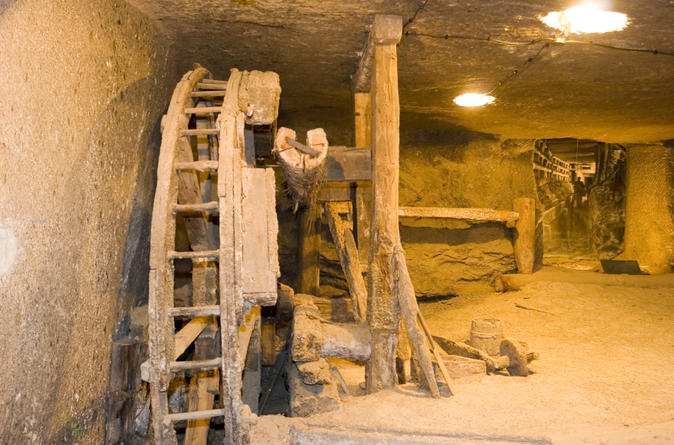
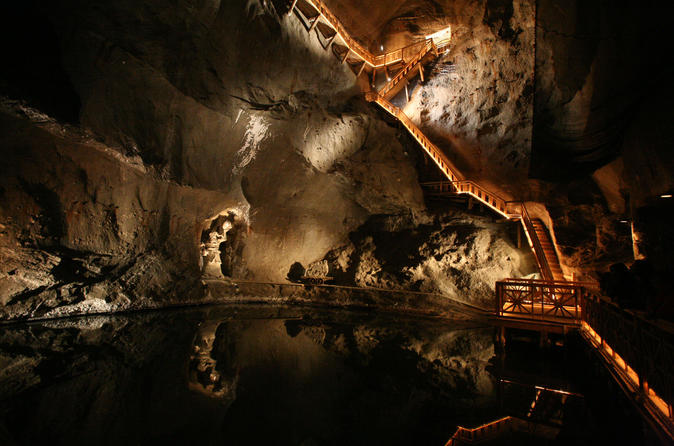
The Salt Dwarves, in contrast with their mountain kin, mine the subterranean salt domes and evaporite basins eschewing their brethren's search for gems and precious ores, instead excavating the "buried ocean."  These mines extend deep into the ground, tapping the halides left by ancient seas and buried under eons of deposits.
source

Like their hard rock mining cousins, the Salt Dwarves hollow huge caverns beneath the earth, for the mines are both their vocation and homes.  The mines are supported by elaborate timber and rope shoring and cribworks, proof against the slowly settling and flowing salt.  Massive water wheels and pumps evacuate the caverns of brackish water.

source
source
Source
Periodically, the dwarves, with their salt-encrusted beards and cracked hands, will come to the surface of their mines, hauling their troves of salt to the surface. Salt dwarves, when encountered, tend to be kitted out in leather armor, with a thick, padded skullcap, and wielding a mining or war-pick. They wear no metallic armor due to the corrosive tendencies of the saline atmosphere within the mines.