Showing posts with label biology. Show all posts

Saturday, July 5, 2025

Step into the Green Hell: A Jackson Joint

Second scenario that I've wrested from my scribbled notes and made presentable. There are plenty more lurking, waiting to be transcribed between real work, exercise, appointments, remembering to eat, walking the dogs...

Anyhow. A good looping space with a significant amount of green.


Interesting. 

What would be growing down there in the dark? I scribbled a bit before some random firing of a brain neuron reminded me that I'd written up a model for a spreading, aggressive invader. No, not kudzu.

So, an ooze that has gained some sort of decentralized, alien intelligence has taken over a shrine. And not only may the PCs want to clear it out, but one of the individuals interred there certainly wants it out of their space.

Watch where you step.

Download me here


Thursday, February 23, 2023

Random Monster: Carnivorous Grass

Solomon dropped his pack. This little copse of grass would do to rest for the night. Green and soft - better than that rocky camp last night. He kicked aside a desiccated dear corpse mounded in the center of the grass. He wasn't about to share a bed with that. Solomon threw down his bedroll, took a nip from his flask, and shut his eyes...

The sun hit his eyes. Groggy, he realized he'd slept past the dawn. He felt numb, his limbs heavy... He'd only had one nip... Feebly, he tried to sit up, only to find himself bound to the ground. Farkin' pixies! No, that wasn't right. His vision cleared, and he saw in horror that his skin had been pierced and threaded with countless blades of grass! Solomon struggled, feebly, feeling drained, as the sun continued to rise. He vaguely felt the grass pierce more fully into his body and wrap more securely around his limbs... 

Don't Step On the Grass

One of many banes of the unwary in the wilderness, Carnivorous Grass presents a tempting "bed" of thick, soft turf for a weary traveler or animal to rest upon. The grass may give itself away by one or more desiccated corpses within its bounds, although the age of the corpse may not be clear, as the grass' attack and consumption of victims accelerates any apparent decay.

Only after they slumber, will the grass present its true nature, working its way through bedding and clothing to pierce the flesh and bind the victim to the ground as it slowly drains them of lifeblood and strength.

The grass manages this feat by producing an anesthetic effect (save vs poison to detect/be awakened). If awakened, the victim may escape with little difficulty, tearing away the grass blades from their flesh. Extracting oneself will cause 1d4 damage.

Those who do not awaken will take 1d6 damage +1d4 STR drain (One "attack" per night, three "attacks" per day). A trapped individual must make a STR test upon awakening to escape the entwining and piercing grass. They may make an additional attempt after each grass "attack," but repeated failures will lead to decreasing chances of escape as their blood and strength are drained. 

(AC: Umm, it's grass.  HD: No matter what you do to it, it's eventually growing back...)

Beware of the Lawn

And of course there's real "carnivorous" grass (via symbiotic fungus, but who's counting?)

Saturday, January 7, 2023

Intruding Upon a Logen Nein Space

Reddit-denizen Logen Nein began posting his map-drawing experiments last year. His style is good, and the spaces are well-laid out, so I've collected a handful that stood out to me for my own creative endeavors.

Like the recent Tim Shorts map, this is a small space, a five-room dungeon if I stretch it. And it's pre-loaded with a few features (web, skeletons, furniture) to imply occupants and a bit of a story. So I took this on as a one-hour writing exercise.

Source

...eight hours later...

OK, the original occupant of the east cave didn't work out with the spider and got eaten. I re-stocked it with a deep elf, based on the OSE drow. Side note - the dark elf thing never quite worked for me, since so many subterranean or deep-water critters lose their pigmentation.

like these guys


So screw it, my deep elves are pallid and bug-eyed. It's my campaign.

like this guy

Anyway... we have a deep elf spy and their arachnid housemate hangin' in a cave, spying on the comings and goings of ships, and feeding the info to the local pirates. 

What cargoes could the deep elves be seeking to secure? Spices? Brightly-colored fabrics? Black light posters? Who knows, they are a mysterious lot.

Have fun with this little cave and its foes

Be good to one another out there.

Sunday, September 11, 2022

Poor Baldo Woldarm: A found Tim Shorts map

 Happy Sunday!

Tim Shorts dropped a small map on the Reddits, and I picked it up.  I've known Tim since the G+ days, and always appreciated his hand drawn and colored maps. 

Tim shared this unnamed piece: 


... and I wanted to write up a brief encounter to fit the space. So our poor dwarf, Baldo Woldarm, happened upon something unexpected during his excavations of a family shrine. Discover what Baldo found, here. 

Coincidentally, I also recently saw an article on the venomous marine bloodworm, with its odd copper and protein teeth. And I can't turn down monsterizing a worm...  But I'm sure that's nothing to be concerned about.


Tim also has a Patreon, where he creates encounters, colorful NPCs, and malevolent beings based partly on his home Komor Forest campaign. 

Anyway, enjoy, and I'm off to the gym and then to prep for tonight's game.

Monday, August 8, 2022

The Beave-phant, coming to a swamp near you!

 Ok. So the wife picked up this thing on impulse:


Apparently it's a plushy called a Squishmallow. And although the character tag claims that this particular plushy (reportedly named "Mila") is an elephant wearing a beaver costume, we of the adventuring community know the truth.

This is yet another unholy chimera, redolent of the owl-bear. 

Do not let Big Plushy lie to you.

The Beave-phant:

Denizens of the meandering savannah rivers, the beave-phant is a dwarf pachyderm hybridized with a beaver by someone who thought it was a good idea.

HD: 4-6; AC 5/14; Atk: Trunk toss and tail slap (2x 1d6+concussion) or trample (2d8); Move 120’ (40’) (on land or swim); Saving Throws D12 W13 P14 B15 S16 (3); Morale 8; Alignment Neutral; Number Appearing 1d4+2; Special: Concussion - save vs paralysis or be knocked unconscious 2d4 rounds. Drowning potential if victim lands in water.

Ancestor-elephant tusks have been substituted with large chewing teeth, which the creatures use to fell trees for construction of their dams and massive lodges. After felling the tree, the beave-phant will drag it to the waterway, manipulating the log with its trunk. The logs are then stacked and woven together and wattled with excavated mud to build their structures. The dams can block rivers, create lakes, and redirect waterways. Additionally, the beave-phants will excavate into the riverbed to create underwater accessways into their lodges. Where an infestation of beave-phants occurs, they can significantly impact river navigation, canal integrity, and riverside communities and agriculture.

Beave-phants live in small family groups, with a matriarch accompanied by one to two generations of her offspring. The females tend to have a retiring nature, and only act in defense of their family pods or lodges. 

Bachelor herds comprised of semi-aquatic, non lodge-building males migrate between water bodies, seeking mates and sparring with one another for territorial dominance. The males have been known to wreak havoc on crops, as well as excavating furrows through saturated ground during their foraging. The males tend to be overtly aggressive, confronting intruders into their territory, whether beave-phant, other large herbivore, or humanoid. The males will often occupy ponds and lodges abandoned by matriarchal groups or other beave-phant.

Abandoned lodges find other semi-aquatic occupants, including the lizard-folk, who may share the environment with the beave-phants. Beave-phants tend to be wary if not defensive towards lizardfolk, as the latter have been known to hunt beave-phant. If a matriarch or male recognizes lizardfolk who have hunted their kin, they will attack on sight, with no quarter. 

While these aquatic pachyderm-hybrids don't have the valuable tusks of their uncorrupted kin, the heavy chewing teeth can fetch a good price with some ivory collectors (1d6x50gp per tooth).

Not a Beave-phant, but a Platybelodon.
Because Nature is more random than I am.


Tuesday, April 5, 2022

Writing Prompt: Secret Jackalope 2022

What's in my Discord inbox today?

You've been paired with Rook#1407, who wants "Take a non-intelligent DND monster of your choosing from the 1977 Monster Manual, like a Roper or Bulette (or a couple of real world animals) and 'speculatively evolve' it into a few distinct evolutionary niches. Basically, take that creature and specialize it into a new environment or ecological role for several dozen million years and see what happens to it. It's more biological that putting gills on a Rust-Monster if it evolves into the oceans. Here's a great example; https://sites.google.com/site/worldofserina/home. Points for stats. Ten thousand million points for a couple of sketches of your new creatures. "

(Or perhaps After Man...)

Welcome to Secret Jackalope 2022. Been a couple of years (or maybe I just missed last year's effort)?

Anyway.

Meet the Hegemonic Cube.

Through assimilation of genetic material over generations of scavenging and predating, at some indistinguishable moment, the gelatinous cube reached a tipping point to gain an alien intelligence, after a fashion

Source

The body form modified from a cube into a lobed protoplasm that extruded throughout its territory, slowly creeping, branching and creating sensory nodes of massive neurons to "feel" its environment. The evolved "hegemonic cube" became a decentralized intelligence, with each nerve center sharing a portion of the creature's intelligence and memory, a redundant, multiple-parallel network.

Creatures of humanoid intelligences, or those similarly evolved, speak of feeling a 'static' in their minds upon approaching one of these slow-moving minds. Those who attempt to probe the cube's "minds" by mental means are often met with blasts of howling psychic energy that can stun, blind, or even destroy a mind. 

Although light sensitive, the "hegemonic cube" has no true vision, relying instead on the sensory input of chemical means. Likewise a "cube" will communicates with other colonies of its type via chemical means - establishing boundaries, or sharing memories and resources.

Thursday, October 3, 2019

Wormkin

Glynn drew this. I wrote up some slapdash words...

Original Sketch by Glynn Seal
Hailing from the Boglands of the south, or found creeping about in the temperate rainforests of the Northwet, the secretive wormkin make their way in their silent, mysterious societies...

Annelid-humanoids ranging in height (length?) of four to six feet, with spindly arms, their moist skin ranges from a translucent pale to dark red in color. Other than than light-sensitive organs around their head regions, the wormkin are essentially blind. Compensating for this, the wormkin have finely-attuned 'tremor-sense' for vibrations and an acute sense of smell. Because of their thin skin, wormkin require moist environments and are found in rainforests, humid caverns, and bogs. Some "invasive" wormkin have been encountered in city sewers and cesspools, although their reason for occupying such spaces in a mystery.

Their society is divided into three classes - Aporrectodea (Priest), Lumbricus (Royal), and Eisenia (Soldier). One will never encounter a single wormkin, as they always travel in groups, or 'congregations' of at least four individuals and up to 100 in verdant, humid locales.

Wormkin communicate via a subtle combination of vibrations and scents, and communication with outsiders is exceptionally difficult. There is a 20% chance that a Priest may have a rudimentary form of ESP, allowing communication with the Aliens, as they refer to any non-wormkin intelligence. Contact with these creatures is almost always a discomforting interaction, as any collection of wormkin seems to act as a hive-mind.

Wormkin:

AC 8/11, HD variable (see below), Att: 1d3 corrosive, or by weapon (hand weapon only), Move 30, Save variable per HD, Al neutral.

Wormkin variable HD (roll 2d6)
2-51 HD
6-82 HD
9-113 HD
124 HD

Special: Due to their squishy nature, blunt attacks cause half damage. Wormkin are highly resilient, though, and are immune to disease, including such things as vermin bites, molds, and mummy rot. Wormkin also have prodigious healing capabilities, recovering 1d6 hp per night of rest. Subsisting on vegetative matter, wormkin have evolved powerful gut enzymes, which can degrade natural fibers (cloth or leather) similar to a jelly or be spat in combat (15' range) for 1d3 hp damage.

Using their tremor-sense and sense of smell, wormkin can discern the distance and direction of a target accurately, and may may track humanoid or larger creatures at distances of up to one-quarter mile. Wormkin are exceedingly difficult to sneak up on, and any thief attempting to do so will make their rolls at two levels lower.

Soldiers and Royals may reinforce their bodies with a chitinous armor of unknown manufacture (AC6/13), and there is a 10% chance for individuals to be wearing ceramic armor (AC3/16). Because of the wormkins' anatomy, this armor may not be transferred to another species, nor will they manufacture, modify, or sell the armor to a non-wormkin. The secrets to these lightweight non-metallic armors is a hard-sought goal.

A congregation of wormkin may commune to effect a number of spell-like abilities - their so-called "Dirt Magic." At least one Priest is required for any spell ability, and a Royal is required for 7th level spell-equivalents:

# wormkin/"Spell" (1e equivalent)

2/"Quicksand" - cause a 10x10' area of soil to 'quick' enough to engulf a humanoid. If the target is not extricated, they will sink and suffocate in one turn. Each additional wormkin increases the diameter of the affected area by five feet.

4/Plant Growth (3rd Druid)

4/Speak with Plants (4th Cleric)

5/Transmute Rock to Mud (5th Druid)

6/Move Earth (6th MU)

7/Conjure Earth Elemental (7th Druid)

8/Earthquake (7th Cleric)

This post is biologist-approved.

Saturday, September 5, 2015

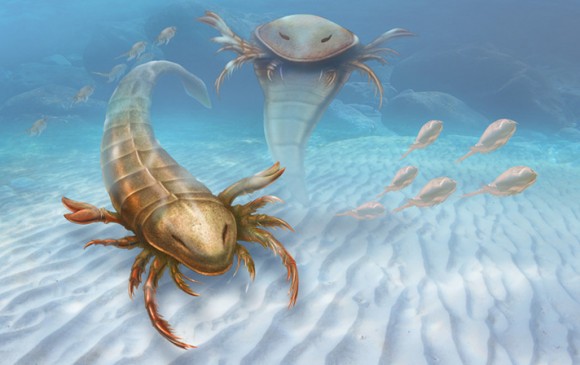
Monster: Eurypterid, Feersum


The recent discovery of a new species of 'sea scorpion,' or eurypterid, pushes evolution of the the Paleozoic predator back approximately 10 million years.  The new genus was named Pentecopterus, after the penteconter, an early Greek galley. Although these particular fossil individuals were approximately six feet in length, specimens of over eight feet long have been found.

The eurypterid was not a scorpion, but an arthropod more closely related to modern spiders, lobsters, and ticks.  The 'sea scorpion' nomenclature come from the spiked tail in some genus', however they have not been found to be venomous, and likely preyed on trilobites and other creatures using modified forelegs and claws.
Source

Sunday, May 31, 2015

dragon parasites

Returning to the realm of 'real' biology for a moment, let's talk parasites... Parasitism is ubiquitous, with some sort of parasite evolved to exploit a host species.  Parasites range from fungus, plants, single-celled organisms, worms, arthropods, and even a few vertebrates.

Most parasitic relationships are commensal, where the host is not significantly harmed or aided. Some are antagonistic, with the host harmed, and some are symbiotic, with the host and parasite both gaining value.

So, it stands that dragons must have parasites. And like dragons, they will be odd and perhaps unpredictable.

Dragon Louses
For this exercise, I'm using eight dragon age categories - ranging from Very Young to Ancient.

For a dragon of any particular age range, there is a 5% chance that they have become exposed to parasites, either via another dragon, or through another vector. For our S&W dragons, this translates to a 5-40% chance that an individual dragon is parasitized (in reality, the chance of parasitism of an organism is greater, but dragons are magical, resistant beasties...).

Conversely, older specimens are less susceptible to side effects from parasites, and the likelihood of a parasite directly affecting an infected dragon will be 100%-(5% per age category); e.g. an ancient dragon will have a 100%-40% = 60% chance of a direct parasite effect.  Effects will be determined by the table, below. Effects from the parasitic infection may be positive, negative, or (since this is S&W), odd...

Parasite Effect Table
Roll d8 & d4 - first is column, second is row


D8/D4
Effect
1
2
3
4

1-3
None
No Effect
No Effect
No Effect
No Effect
4-5
Positive
Increased breath damage (increase die by one*)
One additional attack/ round or increase damage by one die
Faster movement (+5% per age category)
Additional breath weapon use (+1/day)
6-7
Negative
Decreased breath damage (decrease die by one)
 One less attack/ round or decrease damage by one die
Slowed movement
(-5% per age category)
Decreased breath weapon use
(-1/day)
8
Odd
Breath weapon of another dragon, random

* - i.e. d6 to d8, reverse for decreased die 


Depending on the parasite biology, parasites may be passed by exposure during mating, melee or post-mortem butchering/trophy-taking.

Dormant eggs or cysts may be carried by a host creature, with a bite or consuming by a dragon required to hatch the organism.


Monday, April 6, 2015

Random Magic: Kieli's Karttagrafik Curse

Kieli's Karttagrafik Curse:

Ah, to be guileful, never misdirected or lost.  Your mapping skills would be flawless, never wavering, nor confused by tortuous underworld pathways. As an adventurer and explorer, how you prayed for such skills as you desperately tried to backtrack out of a maze before the torches guttered out, or to cross the wastes before the last waterskin was drained.

So when you happened upon that genie, and a wish was proffered, you knew what to request. Lesser adventurers may ask for a life of leisure, or untold riches, but for you, the quest has always been the greatest reward.

And after all, the wish was granted, that you would always have a map in your head.  But as with any wish, specificity is highly advised.


source

"Where are we?"
"I dunno."
"Say 'ah'."
"Ugh, not again.  AHHHH...."
"Ye gods! What have you been eating? Orc ass?"
"Thutup! Just sketch."

Friday, February 13, 2015

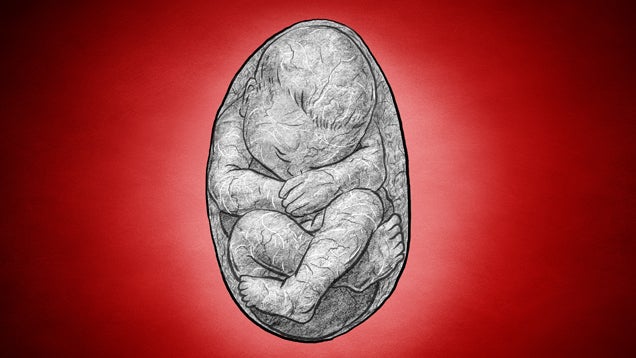
Lithopedions, or "Stone Babies"


A lithopedion, or "stone baby" is a rare condition when a fetus dies during an ectopic pregnancy and is too large to be reabsorbed into the mother's body. The body, instead, calcifies the fetus, protecting the mother form infection. In many cases, the lithopedion remains in the mother's body, and she may go on to have healthy pregnancies.


"The skilled surgeons, Claude le Noir and Iehan Couttas, cut into Madame Charti's body and saw a large growth in her stomach. They broke their razors trying to penetrate the tumor, so they attacked it with mauls and drills. Finally they cracked open the stone and saw inside the head and shoulder of a child.

Excited by their discovery, the surgeons called in other physicians and continued to tear away at the calcified remains with iron tongs. In his book The Two-Headed Boy, Jan Bondeson describes the tumor as hard, "wrinkled and formed like a turkey's crest." The child within it looked like this: "The right arm extended down toward the navel; its hand had been broken off through carelessness when the stone-child was extracted. The bones of the head were transparent and the fontanelles were not closed. In several places the skin of the head was covered with hair. The stone-child had one sole tooth, situated in the lower jaw"."

Lithopedians may occur due to a number of tragic or fateful events. Perhaps a pregnant woman made a narrow escape from a petrifying creature such as a basilisk or cockatrice, but her unborn child was not so fortunate.  Likewise, a curse by a witch or other nasty individual could render the fetus as stone.

Natural birth of the now-petrified child is highly unlikely, and the fetus requires removal by magical means, rough cesarean surgery, or physical removal after the tragic death of the mother.

The stone baby may provide powerful, yet tragic, enchantment.

Its primary use is as a material component for enchanted items and devices. While other, more easily obtained components may be more in favor, the lithopedian, by nature of its petrification within the living body of its mother, eliminates the need for any other components, and amplifies the intended effect.
  • For devices providing protection against petrification, such as potions or rings, a sliver or bit of powdered lithopedian grants an additional +2 to saves
  • wand of petrification (flesh to stone)  - -2 save penalty
  • Stone golem - Speeds Golem to move = 9 (S&W), +2 magic weapons required to hit.
  • Stone guardian golem - if the control ring incorporates a bit of lithopedian, the ring may link up to four guardians.
Laying on of a lithopedian, along with application of cure disase will reverse the petrification of an unfortunate fetus, thus preventing the tragedy from reoccurring...

Tuesday, October 28, 2014

Parasite zombies (October 2014 RPG Blog Carnival)

I realized that I overlooked making my "Things that go bump in the night' entry for this month's Blog Carnival.  I had my wife sketch up a critter and everything!  Oh well, here's another extrapolated real-world nasty for your gaming environment...


There are several varieties of parasites that, as part of their life cycle, 'zombify' or mind-control their hosts in order to procreate.  The typical strategy is to cause the host to lose inhibitions or self-preservation, and therefore expose itself to predation or other harm in order to distribute larva or advance its life cycle. The Cordyceps fungus takes over ants and spiders, the Horsehair worms take over crickets, the broodsac flatworm controls snails.  All lovely lifeforms that are cause for plenty of skin-crawling.

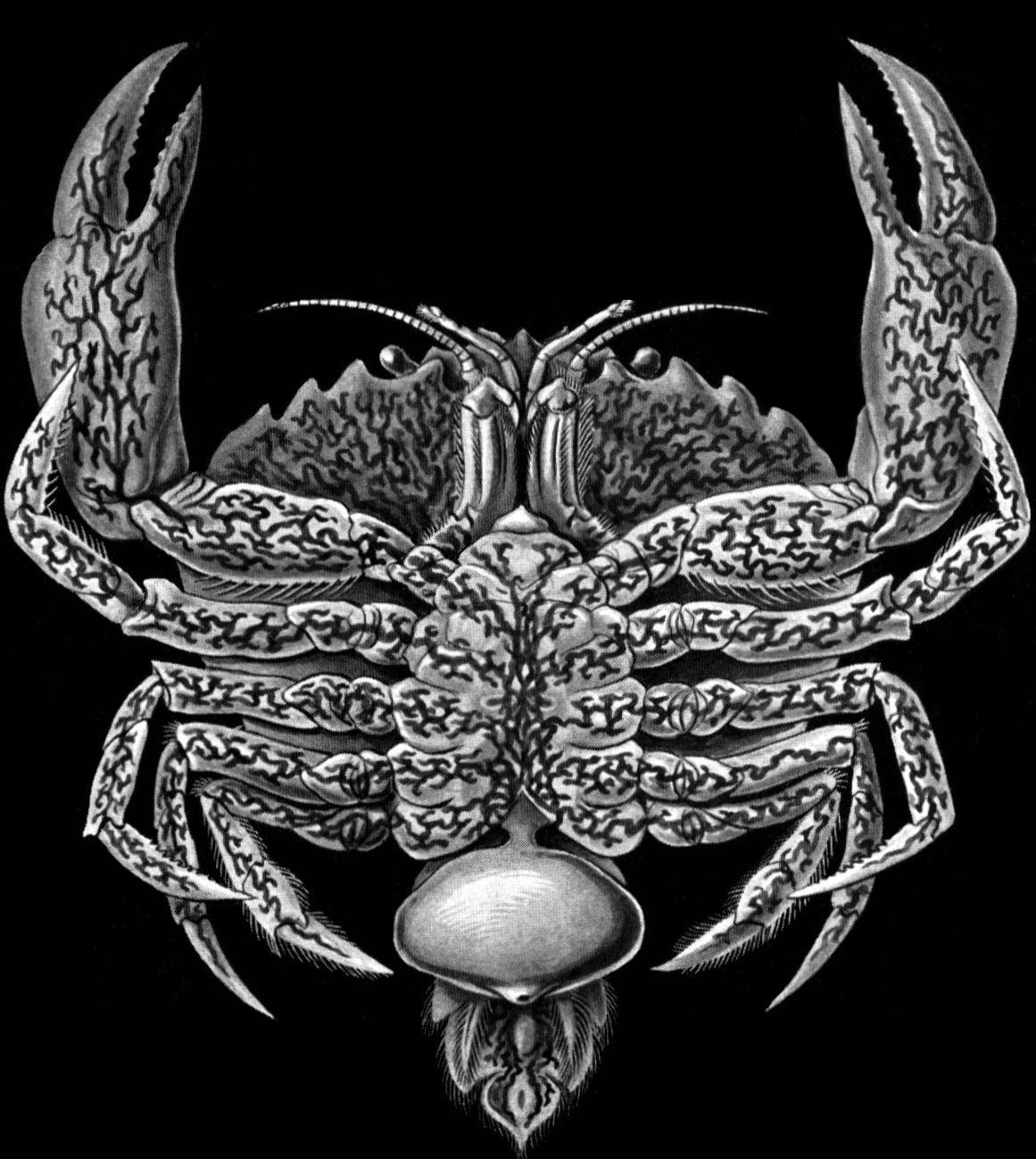
Although known since the late 19th and early 20th Centuries, the Rhizocephala parasitic barnacle popped up on several nature blogs last year, probably due to a lull in people finding things to cringe at on the Internet.

Illustration by the incomparable Ernst Haekel

Briefly, the Rhizocepahla is a parasitic barnacle that has shed its shell, appendages, and most organs in order to become, essentially, a swimming set of gonads and a nervous system. Which it attaches to, and infiltrates, a crab host, co-opting its digestive and nervous system.  Oh yeah, and reproductive system, making the host a brainless walking reproductive organ...

And so, I'll make it a game critter...

Saturday, September 20, 2014

100 posts, or, "I'm just going to keep doing worms."

Zowie, made it to 100 posts, which is approximately 80 more than I expected... Much appreciation to my three loyal readers for getting me this far...

Thanks for reading!

Anyway....

As I proselytized before, nature is apparently ahead of our own imaginations when it comes to the weird and potentially dangerous.  After all, she's got a head start of at least 3 billion years...

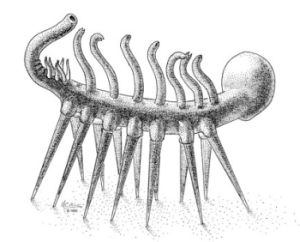
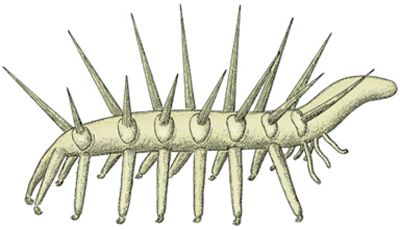
Speaking of which, within the Burgess Shale in northwestern Canada is a plethora of Cambrian fossils.  The fine-grained sediments allowed for preservation of the lifeforms occupying the ancestral ocean, many of which have no living relatives.  It was a time at which evolution was experimenting with body forms and functions, and the first segmented and shelled creatures began to roam about.  One of the well-known fossils of the Burgess is the appropriately named Hallucigenia:


A critter so odd that paleontologists are still debating if the spikes went down...


or up...


Hallucigenia was one of the organisms for which no living relative was suspected.  Until now.  Based on a minor detail of its morphology and body parts, the Hallucigenia, or at least a very distant descendant, still roams the earth...